
학부모민원갑질사례










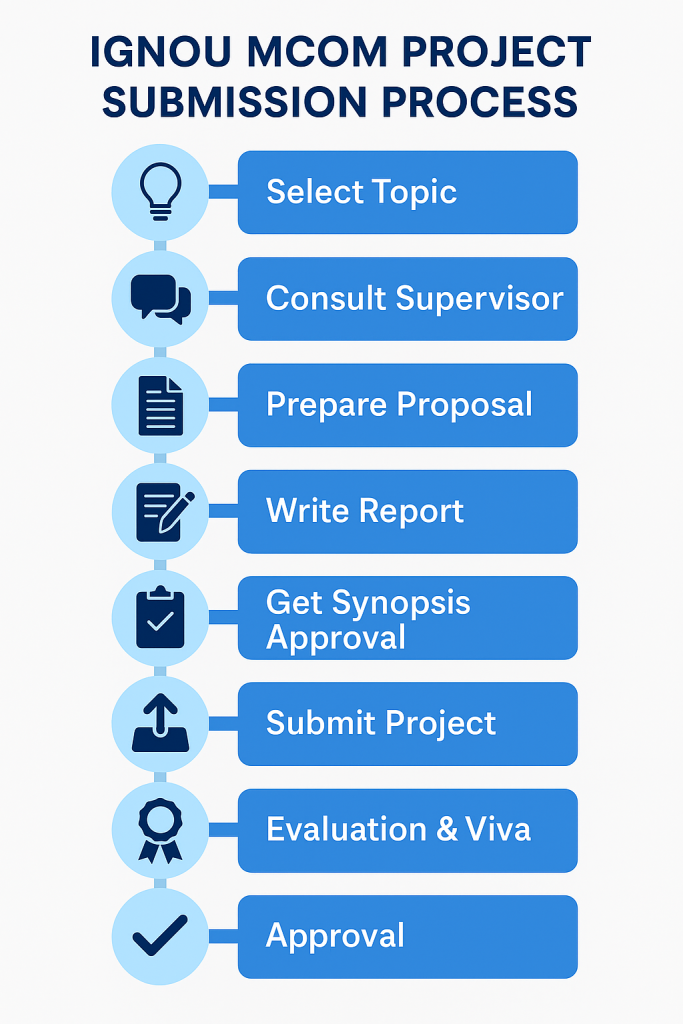
A IGNOU MCom project looks manageable when students first study the handbook. One report, a fixed form, with a limited number of chapters and a clear window for submission. Students often assume that the report will be similar to assignments they have already completed. The confusion begins once actual work starts.
Most project problems are not about intelligence or work. They are the result of small but repeatedly made mistakes that make the project less effective. These mistakes are frequent as they are predictable, easy to spot, and easy to fix. Yet, each year, the majority of IGNOU MCom students repeat them and face revisions or delays.
Be aware of these errors early and make a difference in time, money and stress.
Making a decision without examining practicality
One of the biggest mistakes happens at the topic selection stage. Students pick topics that are appealing but aren't easy to implement.
Some topics are too general. Others require data that is not available. Many rely on organizations that will not allow access. Later, students decrease number of subjects randomly or have to justify weak data.
A good MCom project subject isn't about the complexity. It's about how feasible. It should meet the requirements of available time the data access available, as well as student comprehension.
Prior to deciding the topic, students should ask one simple question. Do I think I can complete this with the resources I have.
Writing vague goals that will guide but do nothing
They are designed to guide the project in its entirety. Many IGNOU MCom projects, objectives are written just to make space.
Students write general statements like for studying impact or assess performance without knowing the subject matter being studied. These objectives do not help in determining a methodological approach or analysis.
If the goal is unclear, each chapter feels confused. Data collection feels random. Analysis lacks direction.
Clear goals function like an outline. Without them, even good data feels useless.
Treating literature reviews as copied content
A common error is copying literature review from websites, old assignments, or repositories on the internet. Students believe that a long literature review indicates a high-quality project.
IGNOU examiners look for understanding rather than volume. They ask students to connect previous research to their own subject.
A literature review should outline what research has already been done and also where the current study best fits. The lack of explanation for studies listed shows that there is no engagement.
The act of phrasing text without understanding increases the risk of plagiarism, even whether students aren't attempting to copy.
Lack of explanation for methodology
Students who are struggling with their methodology have a moment of panic. They understand what they did but are unable to explain it academically.
A few chapters of methodology are copied from other publications without comparing the work to their own. This results in a mismatch between goals methods, data, and objectives.
Methodology should be able to explain why a methodology was selected, how data was collected, and the methods used to analyze it. It doesn't need to be a complicated terminology. It's clear.
Simple and truthful methods is always better than the complicated and copied method.
The collection of data is not pertinent
Students may collect data because it is available but not to meet objectives. Surveys are not conducted with proper design. The questions are not linked to research objectives.
Later, during analysis, students have trouble interpreting outcomes in a meaningful way. Charts appear fine, however conclusions seem forced.
Data should aid the work instead of enhancing it. Each question should be linked with at least one purpose.
The best projects use less information and explain the process well.
Incorrect interpretation of the findings
Most IGNOU MCom projects include tables and graphs. But they don't clarify what they depict. Students think that the numbers speak for themselves.
Examiners expect interpretation. What does this percentage indicate. Why is this trend significant. How does it relate to the goals.
It is not interpreting. Decoding meaning is.
The weak interpretation makes the entire analysis chapter feel unfinished.
Disregarding IGNOU format guidelines
These mistakes can be minor but costly. Wrong font size, incorrect spacing, missing certificates, or wrong chapter order create problems during submission.
Students may correct their format only after they have finished, which causes mistakes to be made in a hurry.
IGNOU guidelines on format must follow from the beginning. This can save time and also avoid anxiety at the last minute.
Good formatting also makes the project easier to comprehend and analyze.
Speeding through the final chapter
The concluding chapter is often written in a hurry. Students summarise chapters rather than present results.
A convincing conclusion will explain the findings, not what was written. It should tie findings with goals and provide practical suggestions.
Weak conclusions make the entire project seem unfinished, even the earlier chapters are good.
Do not rely too heavily on last minute fixes
Many students put off their work because they think it can be completed quickly. Research writing does not work that way.
Writing last minute can lead to accidental mistakes, insufficient research, and even formatting issues.
Steady progress with small events reduces pressure while improving quality.
Afraid of asking for money
Some students hesitate to seek help. They believe asking questions is a sign of the weakness of their students.
However, all academic endeavors require guidance. Supervision, mentors and academic aid are available for an reason.
The early identification of doubts can help avoid costly mistakes later.
Asking for help with ignou's MCOM project for structure and understanding is not illegal. It is practical.
A misunderstood understanding of the academic aid
There's confusion among instruction and unfair practices. Ethical academic support helps students be aware of their obligations, improve their speaking, and structure work.
It doesn't record content or create data.
Students who are guided often master their work more effectively and can perform more effectively during evaluation.
Reviewing the project in its entirety. part of the overall project
Students often concentrate on chapters individually but never read the entire project as one. This leads them to repeat the same chapter, resulting in inconsistent, and inconsistencies.
Examining the whole project one time will uncover any mistakes or gaps which are not otherwise noticed.
This simple change can boost overall coherence dramatically.
The value of learning to avoid these mistakes
Being aware of mistakes is more than ensure approval. It helps students understand basic research concepts.
The MCom project is usually the first experience in research. If you handle it correctly, you will gain confidence for future studies.
Students who take a course in research discipline during MCom have better results at higher levels and in professional jobs.
A realistic thought to conclude
IGNOU MCom projects do not fail because of the inability of students. They fail because students are not aware of their expectations.
The majority of mistakes are they are easily prevented. The ability to plan, be aware, and guidance can make all the difference.
When students focus on clarity instead of complexity and complexity, projects become more simple completed and easier to approve.
This is the way IGNOU MCOM project help (the full report) MCom projects should be managed, logically as well as with a solid knowledge.