
학부모민원갑질사례










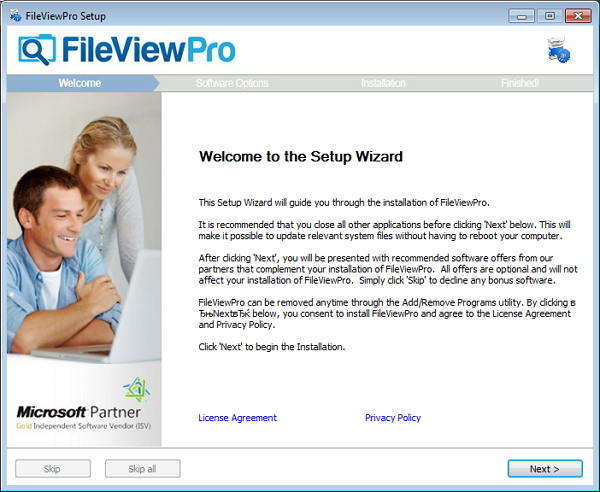
An AAX file functions as an Audible Enhanced Audiobook, a proprietary container designed by Audible as its in-house audiobook format to deliver audiobooks with higher quality and richer features than older formats like AA. Introduced as an evolution of Audible’s earlier AA format, AAX was built to support features like chapter markers, embedded cover art, bookmarks, and sometimes even supplemental data such as images or scripts, all wrapped around a compressed audio stream that is typically based on AAC. Due to its proprietary and often DRM-protected design, AAX usually does not play in generic desktop players, and users often encounter errors or silence when they try to open these files outside Audible’s own software. By using FileViewPro as your viewer and inspector, you gain a central place to open AAX audiobook files, review their technical and tag information, and when allowed by rights and protection, turn them into everyday formats that integrate better with the rest of your audio library, without juggling multiple niche tools or guessing which app might recognize them.
Behind almost every sound coming from your devices, there is an audio file doing the heavy lifting. From music and podcasts to voice notes and system beeps, all of these experiences exist as audio files on some device. In simple terms, an audio file is a structured digital container for captured sound. That sound starts life as an analog waveform, then is captured by a microphone and converted into numbers through a process called sampling. Your computer or device measures the sound wave many times per second, storing each measurement as digital values described by sample rate and bit depth. Taken as a whole, the stored values reconstruct the audio that plays through your output device. The job of an audio file is to arrange this numerical information and keep additional details like format, tags, and technical settings.
The story of audio files follows the broader history of digital media and data transmission. Early digital audio research focused on sending speech efficiently over limited telephone lines and broadcast channels. Organizations like Bell Labs and later the Moving Picture Experts Group, or MPEG, helped define core standards for compressing audio so it could travel more efficiently. In the late 1980s and early 1990s, researchers at Fraunhofer IIS in Germany helped create the MP3 format, which forever changed everyday listening. By using psychoacoustic models to remove sounds that most listeners do not perceive, MP3 made audio files much smaller and more portable. Different companies and standards groups produced alternatives: WAV from Microsoft and IBM as a flexible uncompressed container, AIFF by Apple for early Mac systems, and AAC as part of MPEG-4 for higher quality at lower bitrates on modern devices.
Over time, audio files evolved far beyond simple single-track recordings. Two important ideas explain how most audio formats behave today: compression and structure. With lossless encoding, the audio can be reconstructed exactly, which makes formats like FLAC popular with professionals and enthusiasts. By using models of human perception, lossy formats trim away subtle sounds and produce much smaller files that are still enjoyable for most people. You can think of the codec as the language of the audio data and the container as the envelope that carries that data and any extra information. Because containers and codecs are separate concepts, a file extension can be recognized by a program while the actual audio stream inside still fails to play correctly.
The more audio integrated into modern workflows, the more sophisticated and varied the use of audio file formats became. Within music studios, digital audio workstations store projects as session files that point to dozens or hundreds of audio clips, loops, and stems rather than one flat recording. Surround and immersive audio formats let post-production teams position sound above, behind, and beside the listener for a more realistic experience. Video games demand highly responsive audio, so their file formats often prioritize quick loading and playback, sometimes using custom containers specific to the engine. Spatial audio systems record and reproduce sound as a three-dimensional sphere, helping immersive media feel more natural and convincing.
Beyond music, films, and games, audio files are central to communications, automation, and analytics. Voice assistants and speech recognition systems are trained on massive collections of recorded speech stored as audio files. When you join a video conference or internet phone call, specialized audio formats keep speech clear even when the connection is unstable. In call centers, legal offices, and healthcare settings, conversations and dictations are recorded as audio files that can be archived, searched, and transcribed later. Security cameras, smart doorbells, and baby monitors also create audio alongside video, generating files that can be reviewed, shared, or used as evidence.
Another important aspect of audio files is the metadata that travels with the sound. Inside a typical music file, you may find all the information your player uses to organize playlists and display artwork. Tag systems like ID3 and Vorbis comments specify where metadata lives in the file, so different apps can read and update it consistently. When metadata is clean and complete, playlists, recommendations, and search features all become far more useful. However, when files are converted or moved, metadata can be lost or corrupted, so having software that can display, edit, and repair tags is almost as important as being able to play the audio itself.
The sheer variety of audio standards means file compatibility issues are common in day-to-day work. Older media players may not understand newer codecs, and some mobile devices will not accept uncompressed studio files that are too large or unsupported. Collaborative projects may bundle together WAV, FLAC, AAC, and even proprietary formats, creating confusion for people who do not have the same software setup. If you liked this write-up and you would like to obtain additional info regarding AAX file reader kindly go to the site. Years of downloads and backups often leave people with disorganized archives where some files play, others glitch, and some appear broken. By using FileViewPro, you can quickly preview unfamiliar audio files, inspect their properties, and avoid installing new apps for each extension you encounter. Instead of juggling multiple programs, you can use FileViewPro to check unknown files, view their metadata, and often convert them into more convenient or standard formats for your everyday workflow.
For users who are not audio engineers but depend on sound every day, the goal is simplicity: you want your files to open, play, and behave predictably. Yet each click on a play button rests on decades of development in signal processing and digital media standards. From early experiments in speech encoding to high-resolution multitrack studio projects, audio files have continually adapted as new devices and platforms have appeared. A little knowledge about formats, codecs, and metadata can save time, prevent headaches, and help you preserve important recordings for the long term. FileViewPro helps turn complex audio ecosystems into something approachable, so you can concentrate on the listening experience instead of wrestling with formats.